
Meet the Project Team
Funded by the Arts and Humanities Research Council (AHRC) and led by the University of South Wales.
The Project Team
University of South Wales
NHS Highland
Change Mental Health
University of Dundee
University of the Highlands and Islands
In partnership with local communities, artists, organisations and stakeholders
Sara Bradley
Project Lead
University of South Wales
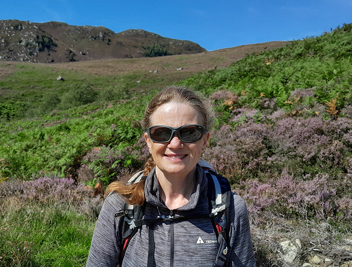
Dr Sara Bradley is a Senior Research Fellow at the University of South Wales. She has over 16 years’ experience of conducting qualitative and evaluative work in rural health contexts. She has a BA Hons from the University of Oxford and a PhD from the University of Aberdeen. Her research interests include rural health service provision, social prescribing, green health, social gerontology, co-production and health inequalities. She recently led the AHRC/UKRI funded Prescribe Heritage Highland project examining the challenges of delivering culture and nature-based interventions in rural areas in partnership with local museums and archive centres.
Sara's hope for Rural Health Equity is that more people will engage with local heritage and benefit from the positive impact this can have on their mental health and well-being.
University of South Wales: Faculty of Life Sciences and Education
Lesley McKee
Project Coordinator
Change Mental Health
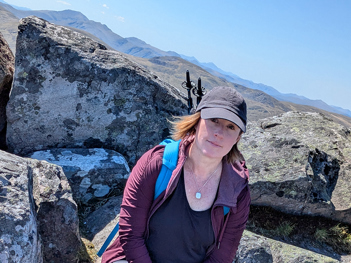
Lesley McKee is a member of the Policy, Public Affairs and Communications team at Change Mental Health. She joined the organisation in 2024, bringing experience in creative leadership, project management and strategic planning. Lesley holds a Master of Design degree from the University of Dundee (2007), which sparked a long-standing professional focus on co-production and strategic design. Prior to joining Change Mental Health, she was Programme Leader for the Visual Communications and Design programme at the University of the Highlands and Islands (UHI). She also managed the Creative Industries Department at UHI Perth, overseeing a broad portfolio of programmes across further and higher education. With a strong commitment to connection and collaboration, Lesley has led numerous strategic projects in partnership with communities and organisations across the public, private and third sectors. She is passionate about participatory methods, regional planning and policy development in advance of social justice and sustainable development.
Lesley's hope for Rural Health Equity is creativity and connection in the realisation of sustained and inclusive community-led activities and services supportive of health and wellbeing.
Liz Ellis
University of South Wales
Liz Ellis' background is in Disability Studies and Inclusive Research. Her work focuses on rural community research around health and wellbeing, drawing on participatory and coproduced approaches to work equitably with community participants. Liz is passionate about widening the appeal of research outwith the academic community and has particular expertise in training up and supporting community members to be peer researchers, including people with learning disabilities and high school children.
Liz's hope for Rural Health Equity is for communities to develop strong and sustainable bonds and a sense of solidarity with the diverse people who make up those communities.
University of South Wales: Faculty of Life Sciences and Education
Jenny Hall
University of Highlands and Islands
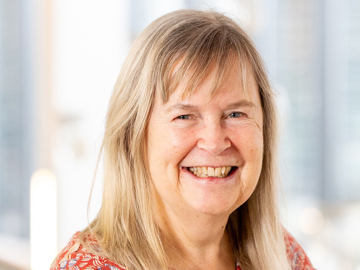
Jenny Hall has been researching rural health and wellbeing in the Scottish Highlands since 2010. Rural social prescribing has been a key area of research over the last five years, including analysis of data from the mPower project and an evaluation of the Community Link Worker service in Highland. As part of the Prescribe Heritage Highland team, Jenny looked at ways of assessing the scalability of social prescribing interventions in a rural context.
Jenny's hope for Rural Health Equity is seeing rural communities create meaningful solutions to their local wellbeing needs, finding out what factors have influenced these solutions, and understanding how other rural communities could take the knowledge gained into account when considering their own local wellbeing needs.
University of Highlands and Islands: Centre for Rural Health Sciences
Gill Hubbard
University of Dundee
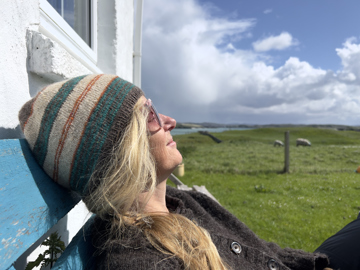
Gill Hubbard has a PhD in Education, MSc in Computing Science and a BA (Hons) in sociology and social policy. Gill’s first postdoctoral research position was in a health research unit and thereafter she developed a strong portfolio of health services research and teaching. Gill is a behavioural scientist who is interested in improving behaviours to improve health and wellbeing. She is passionate about relational approaches to working with individuals and communities and applies models of public participation and patient and public involvement and community co-production. Her research activity is concerned with evidencing through co-creation interventions, how we might tackle health inequalities and enhance empowerment and resilience for communities and individuals. Gill’s methodological expertise is in qualitative and mixed methods applied to co-created design, implementation and evaluation of complex interventions, including feasibility and pilot studies, full RCTs and process evaluations.
Gill's hope for Rural Health Equity is that we reduce illness caused by poverty and deprivation and improve attitudes and behaviours towards people who feel or are perceived as different and fully include them in our communities.ferent and fully include them in our communities.
Jim Hume
Change Mental Health
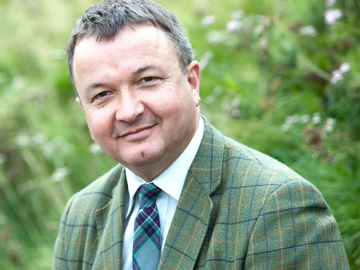
Jim Hume is Director of Public Affairs and Communications at the mental health charity Change Mental Health. Change Mental Health has been supporting people with mental illness and their carers for over 50 years and employs around 200 people across Scotland. Previous to joining Change Mental Health, Jim started his working life hill farming in the rural Scottish Borders, was active as a Director of the National Farmers’ Union, Scottish Enterprise and the Borders Forest Trust, going on to represent South Scotland in Holyrood where he championed mental health and brought legislation in to protect children from second hand smoke in cars. He also currently is Chairman of The Health and Social Care Alliance Scotland and is on the Board of Feniks the charity actively supporting the eastern European community in Scotland.
Jim's hope for Rural Health Equity is that people can be supported no matter where they live in rural Scotland and in a way that is best suited to them.
Organisation: Change Mental Health
Mark Llewellyn
University of South Wales
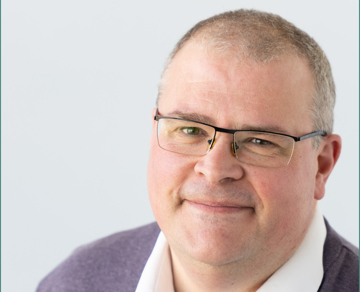
Mark Llewellyn is Professor of Health and Care Policy and Director of the Welsh Institute for Health and Social Care (WIHSC) at the University of South Wales. Since 2008 at WIHSC, he has undertaken more than 100 specialist research studies and evaluative reviews in health and social care across the UK. Mark’s research has centred on the application and implementation of health and social care policy in practice, and the evidence of its effectiveness. He is also interested in the role and influence of the third sector in care, well-being and health, and the influence that independent, academic evidence has on policy at a national level.
Mark's hope for Rural Health Equity is that our partnership will be able identify insights from the research which lead to sustainable change for communities.
University of South Wales: Welsh Institute for Health and Social Care
Sandra MacAllister
NHS Highland
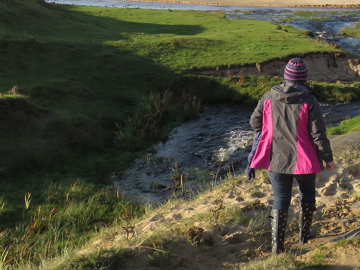
Sandra MacAllister graduated with a degree in Human Nutrition and Dietetics in 1992 and worked in the food industry in product development. She joined NHS Grampian in 1997 and worked in various roles, the majority of which focused on reducing health inequalities. Sandra has a keen interest in social equity and health inequalities and in 2009 returned to studying and completed her MSc in Health Improvement and Health Promotions in 2011. In 2014 she moved to the Highlands and continues to work for the NHS, with her portfolio continuing to focus mainly on areas relating to health inequalities and poverty reduction.
Sandra's hope for Rural Health Equity is that it increases our understanding of how rural communities are impacted by health inequalities and what can be put in place to address and mitigated these, using local resources and assets.
NHS Highland: Public Health
Katie Murray
University of Highlands and Islands
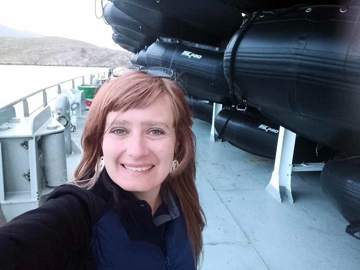
Dr Katie Murray has a background as a museum curator and in historical interpretation. At the Centre for Recreation and Tourism Research she specialises in applied research projects that draw on cultural heritage and has co-managed projects in the fields of heritage tourism and the co-production of heritage assets with local communities. Her favourite leisure activity is beachcombing with her dog and young family.
Katie's hope for Rural Health Equity is that it promotes the idea of museums and historical sites, so often seen as the preserve of tourists, as places for community members to learn more and be inspired by their locale.
University of Highlands and Islands: Centre for Recreation and Tourism Research
Iain Robertson
University of Highlands and Islands
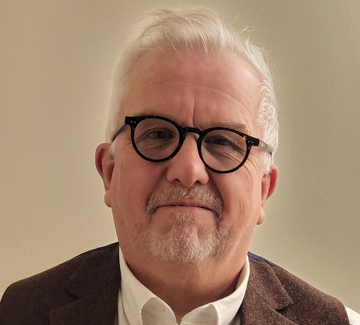
Iain Robertson is Associate Professor of Historical Geography at the Centre for History, UHI. He is an internationally recognised expert in critical heritage studies with a particular interest in the utilisation of a sense of inheritance from the past which works for (and from) local communities and senses of identity. With these ambitions to the fore, Iain has worked with communities across England and the Highlands and Islands especially, undertaking archival training, co-produced historical research and interpretation panels. His most intense set of activities were around the centenary of the end of World War One and the commemoration of the Iolaire disaster. In collaboration with local history societies, Iain helped develop the online commemorative app, Visualising the Iolaire, which has had a global impact.
Iain's hope for Rural Health Equity is that through working collaboratively with local communities across the region we will make a difference to people's lives, to the way in which museums and archives think about themselves and the work they do, and to the ways in which heritage is utilised in the Highlands and Islands.
University of Highlands and Islands: Centre for History
Cathy Steer
NHS Highland
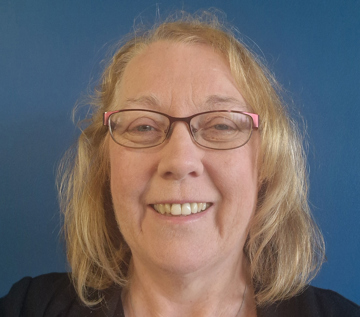
Cathy Steer is the Head of Health Improvement with Public Health in NHS Highland and leads the strategic and operational health improvement function in the NHS Board. She has worked in Public Health for nearly 30 years and has a particular interest in health inequalities and community health development. She graduated from Robert Gordon University in Aberdeen with a Masters in Health Improvement and Promotion in 2006 and is a registered Public Health Specialist with the UK Public Health Register.
Cathy's hope for Rural Health Equity is that we will better understand how to tackle health inequalities in remote and rural areas.
NHS Highland: Public Health
Steve Taylor
University of Highlands and Islands
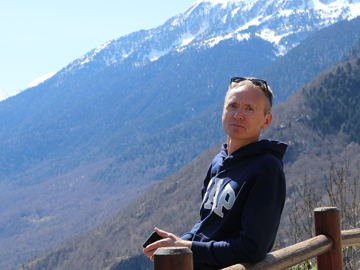
Dr Steve Taylor is director of the University of the Highlands and Islands’ Centre for Recreation and Tourism Research. Much of his work is centred on collaborating with international partners on sustainable tourism projects– the centre is currently involved in major projects exploring the injustices of tourism and regenerative tourism, as well as how the great outdoors can positively affect the wellbeing of young people. Steve’s scholarly output has recently been on the slow adventure marketing concept, adventure recreation and cultural heritage tourism. In his spare time he can found wandering the highlands on foot or on his bike.
Steve's hope for Rural Health Equity is that more people recognise the great value of these tremendous cultural resources communities have at their disposal, as wonderful assets for fostering a sense of a connection to people, place and planet.
University of Highlands and Islands: Centre for Recreation and Tourism Research


Stay Updated
As the project evolves you will find information on events, activities and in our Communities pages, which will launch soon. These will be updated regularly throughout the project.
To see what’s happening near you, you can also check out the events calendar and follow us on social media for regular news and updates.
If you have any questions, want to take part in events and activities, or would like to learn more, please contact us at: contact@ruralhealthequity.co.uk.
Feel free to get in touch!